


Tax-Intelligent Planning Concepts
Tax-Intelligent Planning
Tax‑intelligent planning is a foundational part of building a well‑coordinated financial strategy. Because taxes impact nearly every financial decision, it’s important to evaluate all aspects of a client’s financial picture—not just investments in isolation. By taking a holistic, tax‑aware approach, our financial professionals can help clients identify opportunities, align strategies across planning areas, and make more informed decisions aimed at preserving and keeping more of what they earn over time.
To support this approach, we’ve mapped out a comprehensive framework for financial planning, where each offering represents a core component of a tax‑intelligent strategy. This allows major planning topics to be addressed systematically and in coordination with one another.
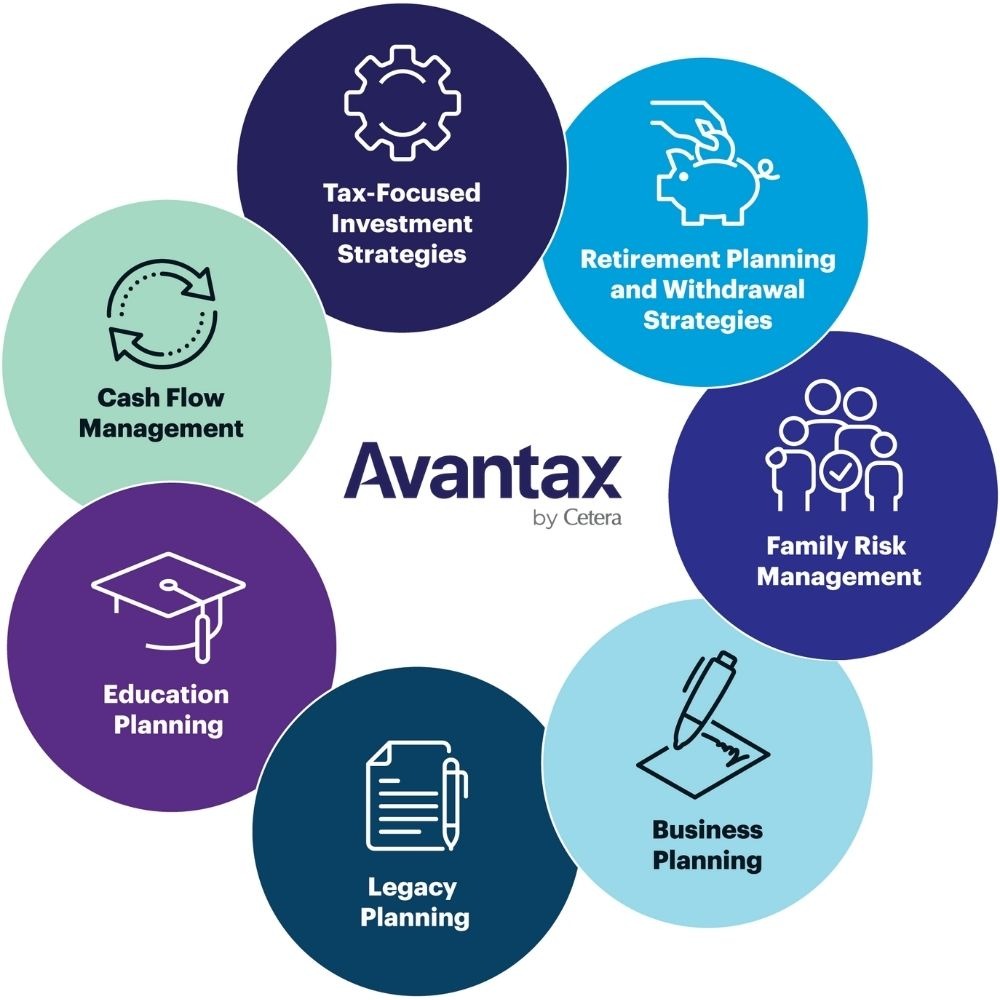
Tax-Focused Investment Strategies
Navigating the markets requires having an investment portfolio that serves as a reflection of your risk tolerance, time horizon, and liquidity needs. But there is an additional step to ensure the returns you earn are not eroded by taxes. Having an investment strategy that meets your financial goals and minimizes your tax liability is paramount to your overall financial plan.
Retirement Planning & Withdrawal Strategies
While retirement may start in the later stages of life, the dreams of retirement start much sooner. The earlier retirement needs are identified and addressed, the more likely you will realize those dreams. Planning for both the accumulation and withdrawal stages of retirement requires consistency, discipline, and accounting for the tax implications of saving and spending in retirement.
Family Risk Management
Every financial plan has potential risks associated with it―risks that can become prevalent when life happens. It is important to mitigate those risks so the financial plan, and your family, does not suffer because of those catastrophic life events.
Business Planning
Most businesses in the U.S. are not run by corporations, but rather families. Planning for contingencies in running a business allows for both employer and employee to succeed financially, especially during times where the focus is on the day-to-day operations as compared to the company vision. Contingencies include business growth, business continuity, employee retention, and tax savings.
Legacy Planning
How do you want to be remembered? Legacy planning comes down to being able to ensure your wishes, values, and priorities are upheld throughout life. Whether it is through education, charitable giving, or trust planning, building a legacy can ensure the next generation(s) of your family are supported.
Education Planning
Despite increasing tuition costs, education planning can be an easy financial hurdle to overcome. With recent tax-law changes, education planning is not limited to college. It is important to discuss educational options for both children and grandchildren, and see how these options can affect cash flow, debt management, and estate tax planning.
Cash Flow Management
The concept of cash-flow management boils down to one thing―how much are you saving versus how much are you spending? Having a plan where your savings and spending choices reflect your values and priorities can positively affect your financial plan. Having a clear picture of monthly inflows and outflows can lead to informed decisions on other aspects of planning for you and your family.